FOR FOUNDERS, MANAGERS & COACHES
Turn your experience into clear workflows, decision guides, and practical tools your team can use to perform their role with less dependence on you.
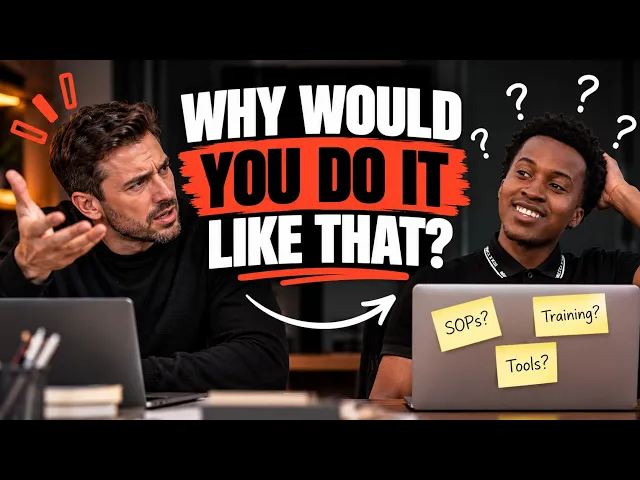
Watch this first to understand the problem we solve and how the system works.
You hired someone to take work off your plate. Why does it keep coming back?
You explain the task. They do it. You correct it. Next week, the same thing happens again. The priorities, decisions, and standards you’ve developed through experience need to become something your team can use without waiting for you.
01 / CONSTANT DEPENDENCE
You delegated the work. You’re still making every decision.
Every “What should I do here?” pulls you back into the role you hired someone else to handle. When you’re unavailable, they wait or guess.-
02 / PERFORMANCE GAPS
Your best employee gets it. Everyone else is still figuring it out.
They have the same tools and instructions, but one person consistently performs better. Until you capture what they notice and do differently, their approach stays theirs alone.
03 / LOST EXPERIENCE
Every replacement shouldn’t mean rebuilding from scratch.
When an experienced employee leaves, their judgement and working methods can leave with them. The next hire repeats mistakes your business has already paid to learn from.
Capture the experience. Put it to work.
Here’s how we turn what you or your best performer knows into a system another employee can use.
1
Capture & Extract
Through conversations and real examples, we study what you do, what you notice, and why you make certain decisions.
2
Translate
We turn that experience into clear priorities, decision rules, and standards, resolving gaps or conflicting instructions along the way.
3
Operationalise
We build the workflows, checklists, scripts, and guides your employee needs to put that knowledge into practice.
4
Deploy
We place the guidance inside the tools your employee already uses, so they can find the right help while doing the task.
5
Observe & Improve
We review actual work, spot where people get stuck, and improve the system to address recurring questions and mistakes.
Your experience becomes something your team can apply, without needing you to explain it every time.
ROLE ENABLEMENT FOR YOUR BUSINESS
Build a role that runs with less dependence on you.
Turn the experience inside your business into practical guidance your employees can use. We capture how you or your best performer approaches the role, then build the priorities, decision guides, and workflows that help someone else carry it out.
What your business gets
Clear expectations: Defined responsibilities, priorities, and examples of what good work looks like.
Guidance for recurring decisions: Help your employee decide what to do, what to check, and when to involve you.
Tools for execution: Workflows, checklists, scripts, and templates built around the agreed tasks.
Support where work happens: Guidance organised inside the tools your employee uses.
Improvements from actual work: Refine the system as recurring questions, mistakes, and gaps become visible.
Start with the role that keeps pulling you back in.
It could be the salesperson who needs constant direction, the social media manager who struggles to put your feedback into practice, or the role only your most experienced employee knows how to handle.
We’ll identify where the work depends on someone’s knowledge and agree on what needs to become transferable.
A clear scope before you commit.
We’ll discuss the role, the people involved, and the work you want to improve.
You’ll receive a proposal outlining the deliverables, timeline, your team’s involvement, and pricing before deciding whether to proceed.
Discuss your role
Your business has the experience. Does your team have access to it?
Role Enablement is for businesses where effective work still depends on the knowledge of a founder, manager, or experienced employee.
This is for you if:
You’re hiring or handing over a role and want the next person to build on what already works.
You keep explaining and correcting the same things because your expectations haven’t become clear, usable guidance.
One employee consistently outperforms the rest and you want to understand which parts of their approach others can adopt.
Too much work depends on you and you want your team to handle recurring tasks and decisions more independently.
We start with a role where you can provide access to someone who knows the work, examples of how it’s done, and an employee who can put the system into practice.
Not sure which role to start with? We’ll discuss where repeated questions, rework, or dependence on one person are creating the biggest obstacle.
FAQs
How is this different from writing SOPs?
SOPs explain the steps. We also capture how experienced people decide which steps to take, what to prioritise, and how to recognise good work. Then we put that guidance into daily use and improve it based on actual execution.
Which roles can you help with?
Roles with recurring tasks and decisions, where someone in your business already understands what effective work looks like. Sales, business development, and social media management are examples. We’ll discuss your role before agreeing on the work.
Can we start before hiring someone?
Yes. We can capture your approach and build the guidance before your next hire joins. Once someone is performing the role, we can observe how they use it and make improvements.
Will we need new software?
We’ll work with your existing tools where practical. If additional software would help, we’ll explain why and discuss the cost before including it.
How much time will I need to contribute?
You or someone experienced in the role will help us understand the work, share examples, and review the guidance. The employee using the system will provide feedback through actual work. We’ll agree on the schedule and involvement before starting.
How much does it cost?
Pricing depends on the role, the work involved, and the support required. After an initial conversation, you’ll receive a proposal with the scope, deliverables, timeline, and price before committing.
How will we know whether it’s helping?
We’ll agree on practical signs of improvement for the role, such as fewer repeated questions, less rework, or more consistent execution. We’ll review these during implementation and use what we learn to improve the system. Specific performance results aren’t guaranteed.
What happens after I get in touch?
I’ll review the details you share and contact you to discuss the role and the problem you want to solve. If there’s a fit, I’ll prepare a proposal. Getting in touch does not commit you to a purchase.
START WITH 1 ROLE
Tell me where you keep stepping in, answering questions, or correcting work. We’ll discuss what your employee needs to handle the role more independently and whether Role Enablement is the right fit.